Let’s talk kink!

The Ms. Phlattered Mnemonic and Kink Negotiation Framework

Use the mnemonic as an easy to remember structure for building healthy, consensual, and exciting kink experiences through clear and transparent communication and prioritizing the well-being of all parties involved.

In our experience it takes about half an hour to discuss and negotiate every Ms. Phlattered section. We recommend doing this if it’s the first time playing together and especially if one or both parties are new to kink. Kink negotiations can be fun and sexy and can build anticipation and excitement for the scene.

Otherwise you could use the mnemonic as a reminder of topics and quickly go through them all. This could take as little as 5-10 minutes.

Whether you’re a seasoned kink practitioner or just beginning to explore, this page will help you navigate these sexy conversations with confidence and consideration. Use the “Download” button to download a pdf copy of the document to your device.

The pdf file has been designed to print to a business card size. We will be printing the card and offering copies to our organizer friends at major kink events in the Metro Vancouver area to offer to their patrons. If you are an event organizer feel free to download, print, and distribute at your event without making any changes to the content. Email us if you need any accommodations for the file type. right click on each of the panels and click “save image as” to download the png image file. All feedback is welcome!
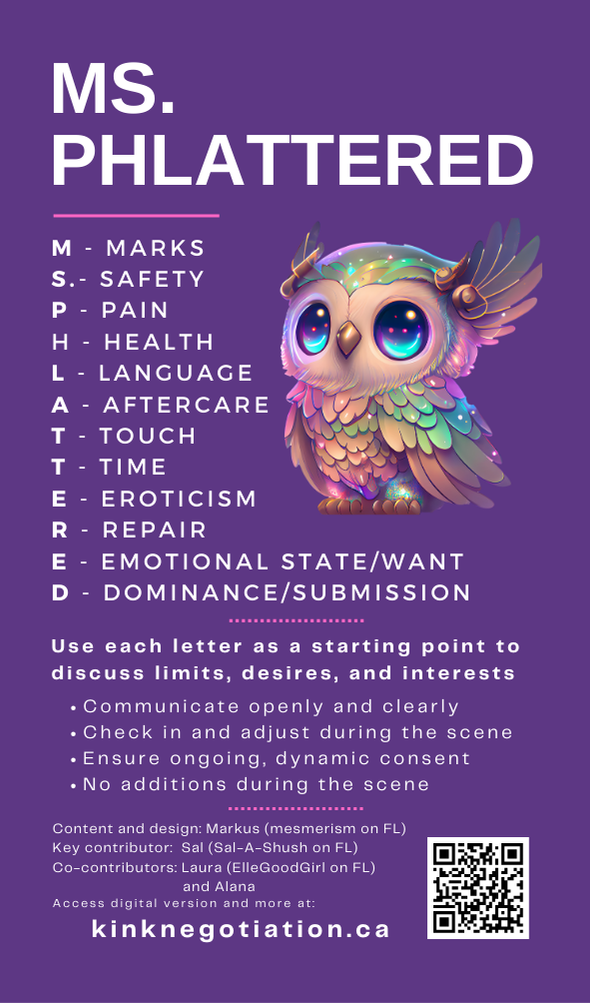
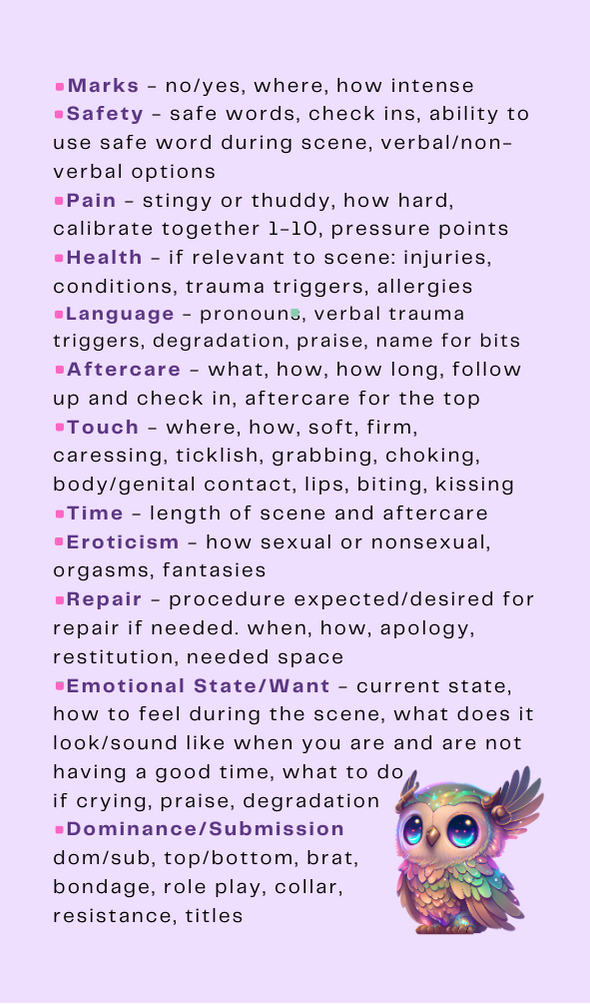
Negotiation is a crucial aspect of any BDSM or kink interaction, as it helps ensure that all parties involved are on the same page, feel comfortable, and are able to fully enjoy the experience while respecting each other’s limits.

The Ms. Phlattered framework is designed to provide an easy to remember negotiation starting point for building healthy, consensual, and exciting kink experiences.

Key Principles

The five key principles of kink negotiation are: Consent, Self-responsibility, Communication, Safety, and Respect.

Kink Negotiation Framework

A more extensive framework on how to negotiate to achieve a consensual and enjoyable experience for everyone.

MS. PHLATTERED
each letter expanded

The ultimate mnemonic to make sure you remember to talk about all the important stuff before you play.

Key Principles

Consent: Consent involves actively and enthusiastically agreeing to engage in specific activities, within the boundaries and limits established by all parties involved. Consent must be enthusiastic, informed, and freely given, devoid of any form of coercion, manipulation, or pressure. True consent necessitates clear communication, ensuring that all parties involved comprehend the nature of the situation, their roles, and the potential outcomes and agree that consent can be withdrawn at any point and respects the autonomy and agency of each individual. It requires ongoing awareness, active listening, and sensitivity to any shifts in feelings or boundaries.

Self-responsibility: Each individual involved in the negotiation process is responsible for taking personal ownership of their actions, choices, and boundaries within the context of kink activities. By practicing self-responsibility and accepting risks and consequences, individuals can engage in kink play with mindfulness, clarity, and accountability.

Communication: Open and honest communication is the foundation of a successful negotiation. This involves creating a mutual safe space to express and discuss desires, limits, boundaries, and expectations openly and clearly. Effective, transparent, and thorough communication helps ensure that all parties have a shared understanding of what is being negotiated, reducing the risk of misunderstandings or unintended harm and allowing everyone involved to make informed decisions and ensure a consensual and safe experience.

Safety: The principle of safety in kink play prioritizes the physical and emotional well-being of all parties involved. It involves taking necessary precautions and measures to minimize the risk of harm or injury. This may include using safe words or signals to establish clear communication during play, checking in with each other, and ensuring that proper safety equipment and protocols are in place. Safety also requires being aware of and respecting personal limits, boundaries, and capabilities, as well as being knowledgeable about potential risks and how to mitigate them.

Respect: This principle underscores the importance of treating all individuals involved with dignity, understanding, and consideration. It involves recognizing and honoring each person’s autonomy, agency, and boundaries. Respect includes actively listening and using appropriate language and refraining from judgment, discrimination, or coercion and fostering an environment of trust, where all parties feel safe to express their desires, needs, and boundaries without fear of judgment or retribution.

Consent should be ongoing and informed. It can be withdrawn at anytime.


Negotiation Framework

Setting the Stage:

Choose a comfortable and private environment for the negotiation. Agree on a timeframe for the conversation, ensuring you have enough time to thoroughly discuss all aspects.

Identify Roles and Dynamics:

Clearly define the roles each participant will assume during the kink activity (dominant, submissive, switch, etc.).
Discuss power dynamics and expectations related to authority, control, and submission.

Aftercare Planning:

Outline aftercare needs, debriefing, and emotional support following the kink activity for each participant. Discuss their duration and specifics that help in transitioning back to a calm and comfortable state.

Set Boundaries:

Define your “hard limits,” which are activities or situations that are absolutely off-limits and non-negotiable. Discuss “soft limits,” which are activities you might be hesitant about but are open to exploring under certain conditions.

Communication Styles:

Discuss how you both prefer to communicate during a scene. Some people might use specific signals, safe words, or non-verbal cues to indicate discomfort or the need to pause or stop. Clarify how you want to check in with each other during the experience.

Discuss Desires:

Share your fantasies, desires, and interests with one another. Share individual kinks, fetishes, interests, and preferences, role-playing scenarios, and power dynamics.


Health and Safety Precautions:

Address any health concerns, allergies, or medical conditions that could impact the kink experience. Talk about the use of safe words, gestures, or non-verbal cues to communicate discomfort or the need to stop.

Emotional Triggers:

Share any emotional triggers you might have. This could include past traumas, triggers related to certain activities, or even words that might evoke negative emotions. Being aware of these triggers will help everyone avoid unintentional harm.

Check-In and Consent:

Periodically check in during the kink activity to ensure everyone is comfortable and consenting. Consent should be enthusiastic, informed, and voluntary.
Consent is ongoing and can be withdrawn at any time.

Duration and Time Constraints:

Define how long the scene or session is expected to last. Allocate time for aftercare and any potential downtime.

Reflection and Follow-Up:

Have a conversation after the scene to see how everyone is feeling, what went well and areas for improvement. Address any concerns if applicable. You can also schedule a follow-up and check-in for the next day.

Pain and Intensity Levels:

Discuss pain tolerance, preferences for sensation (e.g., thuddy or stingy), and pressure points.
Set a pain scale from 1 to 10 to gauge comfort levels during play.

No up-negotiating or altering during the scene. Keep to, or do less than what was negotiated.

Each MS.PHLATTERED Mnemonic Letter Explained

Marks

Are you comfortable with marks and bruises? If yes, what level of marking is acceptable to you? Are you okay with visible marks when dressed? Are you okay with breaking skin or bleeding?

Safety

During the scene, what safe words will we use? How will we conduct check-ins? How can you signal if you’re unable to speak? Have you used safe words before? If not, are you confident you can and will use them?

Pain

Do you prefer stingy or thuddy pain? Before the scene begins, let’s calibrate pain levels from 1 to 10. Are pressure points acceptable to you? What are your pain-related preferences?

Health

Respect privacy and only discuss scene-relevant health issues. Address injuries, conditions, triggers, and allergies. How should we handle these during the scene? What’s the plan if something goes wrong?

Language

What pronouns should be used during the scene? Are there words or phrases to avoid? Any language-based triggers to be aware of? Do you prefer degradation or praise? How should I refer to your genitals and other body parts? Good boy, good girl, good puppy?

Aftercare

What does each party need for aftercare, and for how long? Should snacks or drinks be prepared? How will we follow up after the scene, including aftercare for the top? Consider debriefing favorite moments and potential improvements.

Touch

Where can I touch you? How do you like to be touched (e.g., soft, firm, caressing, ticklish)? How about choking (blood choke or breath choke)? What kind of body/genital contact is off-limits? What’s acceptable? Can I touch your lips? Is kissing, licking, biting okay?

Time

Discuss time constraints and decide how long the scene or session is expected to last. Allocate time for aftercare and any potential downtime.

Eroticism

Is the scene more sexual or nonsexual? Can we involve, withhold, or deny orgasms? Any fantasies to incorporate or roleplay?

Repair

Do you know of a scene that went wrong? How would you prefer such situations to be handled? What’s your preferred procedure for repair/restitution? Do you need space or immediate discussion? In-person, at a café, or over text? What constitutes a meaningful apology?

Emotional State/Wants

How do you currently feel? What emotional state would you like during the scene? How do you express enjoyment or discomfort? If you cry, how should I respond? Do you want praise or degradation? Share your desired emotions for both top and bottom roles: Submissive? Small? Held? Helpless? Cared for? Used? Calm/peaceful? Owned? Powerful? Persuasive? Feared? Scared? Challenged? In-control? Playful? Objectified?  Worshipped? Beautiful? Do you want to be treated like a doll/princess? A pet?, …

Dominance/Submission

Do you prefer being dominated or topped? Bottom or submissive? Any interest in being a brat, engaging in bondage, role-playing, wearing a collar, or displaying resistance? What titles do you prefer? Sir, Master, Baby, Little,

If something has not been negotiated, don’t assume or infer.
Ask before the start of the scene or keep it for the next time.

Resources